This manual is for PSYC FPX 3110 Assessment 1, start to submission. Cognitive-Behavioral Perspective: An Analysis asks you to examine abnormal behavior through the cognitive-behavioral perspective: how the theory developed, how it explains and treats a disorder such as anxiety, how another perspective, such as the sociocultural view, explains the same disorder, and how the perspectives can be integrated. The grade turns on applying the perspective to a disorder and comparing it fairly. Showing what each view explains and misses scores the top column. Below is the method our tutors use, a structure that maps to the criteria, and an annotated sample excerpt. Prefer to hand it off? A premium original sample for this exact assessment comes back in 24 to 48 hours, revised free until it meets the guide. Capella's catalog lists the course as PSYC-FPX3110, and some courserooms print PSYC3110; both point to this same Assessment 1. In current courserooms this assessment typically appears as "Cognitive-Behavioral Perspective: An Analysis".
One honesty note before the manual: Capella revises courses and scoring guides over time, so always write to the exact scoring guide attached to your assessment in the courseroom. The course identity above is verified on capella.edu; the method and structure below are our tutors' approach to it, not Capella's official rubric text.
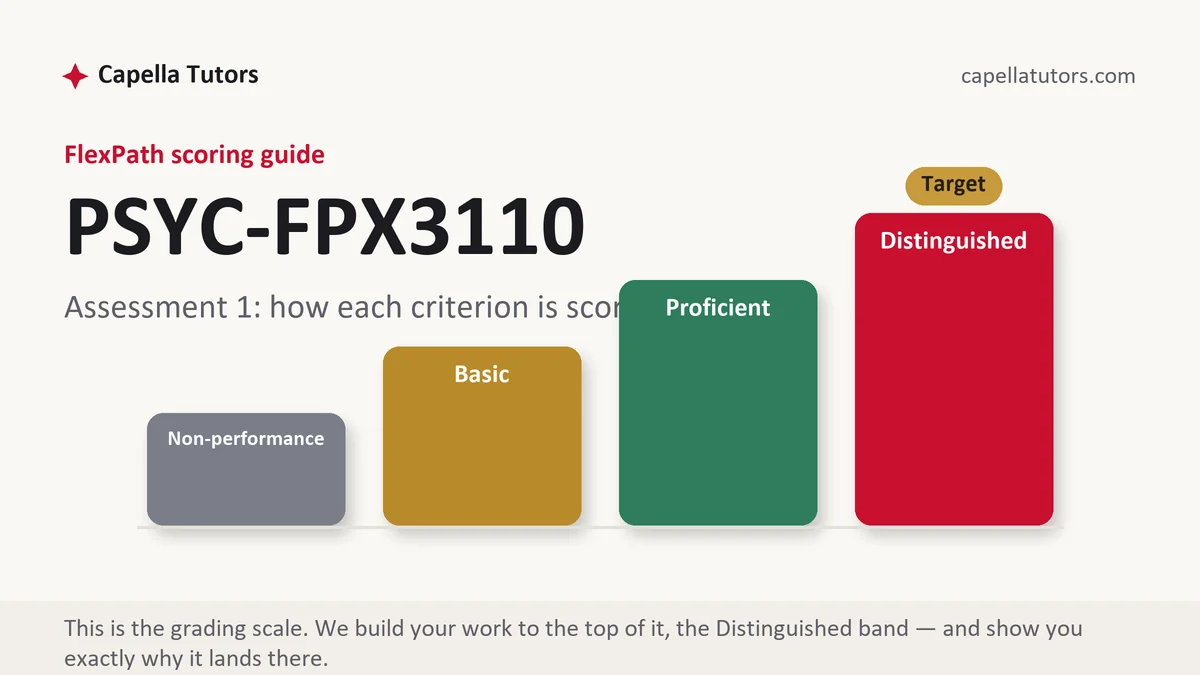
How PSYC FPX 3110 Assessment 1 is scored
FlexPath does not use letter grades. Each criterion in the scoring guide lands on one of four levels, and the level descriptions are the real writing brief:
| Level | What it means on a perspective analysis |
|---|---|
| Distinguished | The perspective analysis is specific to the organization or case, applies course concepts accurately with credible sources, and ends in justified conclusions or recommendations. |
| Proficient | The perspective analysis is accurate, but the application or recommendations are general. |
| Basic | The perspective analysis describes concepts with little application. |
| Non-performance | A required part of the perspective analysis is missing. |
Use abnormal psychology sources and research.
The PSYC FPX 3110 Assessment 1 method, step by step
-
Trace the theory's evolution
Behaviorism to cognitive therapy.
-
Explain the CBT view of the disorder
Thoughts, behaviors and maintenance.
-
Describe CBT treatment
Techniques and evidence.
-
Explain a second perspective
Such as sociocultural.
-
Compare
What each explains.
-
Integrate
A combined understanding.
A structure that maps to the criteria
Word counts are planning targets our tutors use, not Capella rules; follow the length and format your scoring guide states.
| Section | What it must do | Guide |
|---|---|---|
| The cognitive-behavioral perspective | Evolution. | ~125 words |
| CBT approach to the disorder | Explanation and treatment. | ~150 words |
| Sociocultural view | Comparison. | ~125 words |
| Integration and references | Then references. | ~100 words |
Annotated sample excerpt
An original model excerpt from our team, written to show the register that reaches the top of the guide. Learn the moves, then write your own version.
The cognitive-behavioral view explains why anxiety persists: catastrophic thoughts trigger avoidance, and avoidance prevents the person from learning the feared outcome rarely happens.1 The sociocultural view explains why some people are more exposed to anxiety in the first place, such as chronic stress from discrimination or financial insecurity.2 Integrated, they suggest treatment that challenges anxious thinking while also addressing the real stressors in a person's life.3
- 1Explains maintenance through CBT.
- 2Adds the sociocultural explanation.
- 3Integrates them into treatment.
The full premium sample for your exact assessment, written fresh to your scoring guide and topic, is free to request. Study it, revise it into your own voice, and submit work you understand.
The five mistakes that cost Distinguished
- Definitions without application. Apply each concept to the organization or case.
- No sources. Cite credible business sources.
- Vague recommendations. Make them specific and justified.
- One perspective only. Compare and integrate.
Pre-submission checklist
- Theory traced
- Disorder explained
- Treatment described
- Second perspective
- Comparison
- Integration and references
Want the perspective analysis written?
Send the scoring guide and any materials from your courseroom. Our team returns a premium original perspective analysis in 24 to 48 hours, revised free until it meets the guide.