This manual is for BIO FPX 1000 Assessment 1, start to submission. The Cardiovascular System Lab asks you to complete the course's virtual cardiovascular lab and write up what it shows: what blood pressure and heart rate are, how they relate to each other, what the results mean for the patients in the lab, and which lifestyle changes would improve their cardiovascular health. The grade turns on interpretation. Reporting the readings is the start; explaining what they mean for each patient, in plain language with sources, is what scores. Below is the method our tutors use, a structure that maps to the criteria, and an annotated sample excerpt. Prefer to hand it off? A premium original sample for this exact assessment comes back in 24 to 48 hours, revised free until it meets the guide. Capella's catalog lists the course as BIO-FPX1000, and some courserooms print BIO1000; both point to this same Assessment 1. In current courserooms this assessment typically appears as "Cardiovascular System Lab".
One honesty note before the manual: Capella revises courses and scoring guides over time, so always write to the exact scoring guide attached to your assessment in the courseroom. The course identity above is verified on capella.edu; the method and structure below are our tutors' approach to it, not Capella's official rubric text.
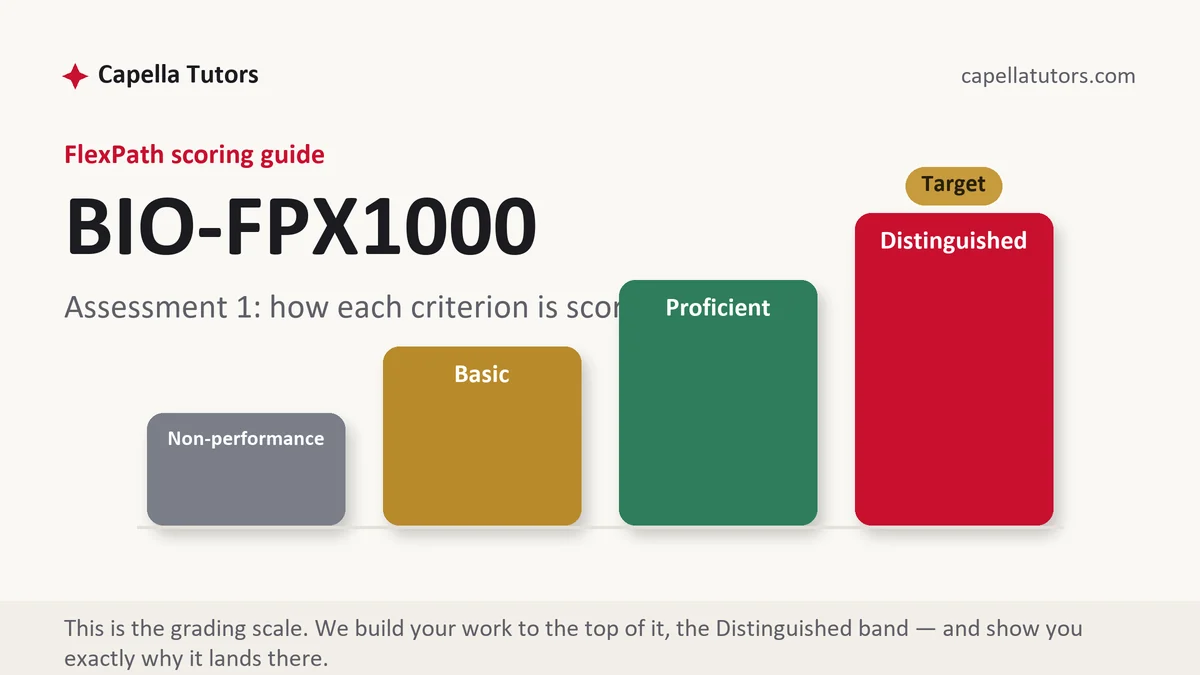
How BIO FPX 1000 Assessment 1 is scored
FlexPath does not use letter grades. Each criterion in the scoring guide lands on one of four levels, and the level descriptions are the real writing brief:
| Level | What it means on the cardiovascular lab |
|---|---|
| Distinguished | Blood pressure and heart rate are explained accurately, their relationship is clear, each patient's results are interpreted against normal ranges, lifestyle recommendations are specific and supported, and sources are cited. |
| Proficient | Explanations and results are accurate, but recommendations are general. |
| Basic | Results are reported with little explanation. |
| Non-performance | A patient's results or the lifestyle recommendations are missing. |
Complete the lab in the courseroom first and use its exact patient results.
The BIO FPX 1000 Assessment 1 method, step by step
-
Explain blood pressure
What systolic and diastolic numbers mean, with current normal ranges from the American Heart Association.
-
Explain heart rate
What it measures and normal resting ranges.
-
Relate the two
How heart rate and blood pressure influence each other, and why they do not always move together.
-
Interpret each patient
Compare each patient's readings with normal ranges and say what they suggest.
-
Recommend lifestyle changes
Diet, activity, sodium, alcohol, smoking and stress, tailored to each patient.
-
Cite sources
Reliable sources such as the AHA, CDC or textbook.
A structure that maps to the criteria
Word counts are planning targets our tutors use, not Capella rules; follow the length and format your scoring guide states.
| Section | What it must do | Guide |
|---|---|---|
| Introduction | Purpose of the lab. | ~50 words |
| Blood pressure and heart rate | Definitions and normal ranges. | ~150 words |
| How they relate | The relationship explained. | ~100 words |
| Patient results | Each patient's readings interpreted. | ~150 words |
| Lifestyle recommendations and conclusion | Tailored changes, then references. | ~100 words |
Annotated sample excerpt
An original model excerpt from our team, written to show the register that reaches the top of the guide. Learn the moves, then write your own version.
The first patient's blood pressure of 142 over 91 falls in the stage 2 hypertension range under current American Heart Association categories, while her resting heart rate of 78 beats per minute is within the normal range.1 That combination is common: high blood pressure often reflects stiff or narrowed arteries rather than a fast heart, which is why a normal pulse does not rule out cardiovascular risk.2 For her, the most useful changes are reducing sodium, which her diet history shows is high, and building toward 150 minutes of moderate activity a week, both of which are shown to lower blood pressure.3
- 1Compares readings with named, current categories.
- 2Explains why the two measures differ.
- 3Tailors recommendations to the patient with evidence.
The full premium sample for your exact assessment, written fresh to your scoring guide and topic, is free to request. Study it, revise it into your own voice, and submit work you understand.
The five mistakes that cost Distinguished
- Reporting numbers only. Interpret what they mean.
- Outdated ranges. Use current AHA categories.
- Generic advice. Tailor changes to each patient.
- Missing a patient. Interpret every patient in the lab.
- No sources. Cite reliable references.
Pre-submission checklist
- Lab completed
- Blood pressure and heart rate explained
- Relationship explained
- Every patient interpreted
- Tailored lifestyle recommendations
- Sources cited
Want help with the lab write-up?
Send the scoring guide and your lab results. Our team returns a premium original write-up in 24 to 48 hours, revised free until it meets the guide.