This manual is for MHA FPX 5020 Assessment 4, start to submission. The Data Analysis Project Report presents the evidence behind your capstone project: a synopsis of the problem, the factors you examined and how each was measured, the key findings from the literature, the data presented in graphics, your analysis of what the data show, and evidence-based recommendations. The grade turns on the data. A report that describes the problem again scores lower than one whose graphics and analysis show the size, trend and drivers of the problem. Below is the method our tutors use, a structure that maps to the criteria, and an annotated sample excerpt. Prefer to hand it off? A premium original sample for this exact assessment comes back in 24 to 48 hours, revised free until it meets the guide. Capella's catalog lists the course as MHA-FPX5020, and some courserooms print MHA5020; both point to this same Assessment 4. In current courserooms this assessment typically appears as "Data Analysis Project Report".
One honesty note before the manual: Capella revises courses and scoring guides over time, so always write to the exact scoring guide attached to your assessment in the courseroom. The course identity above is verified on capella.edu; the method and structure below are our tutors' approach to it, not Capella's official rubric text.
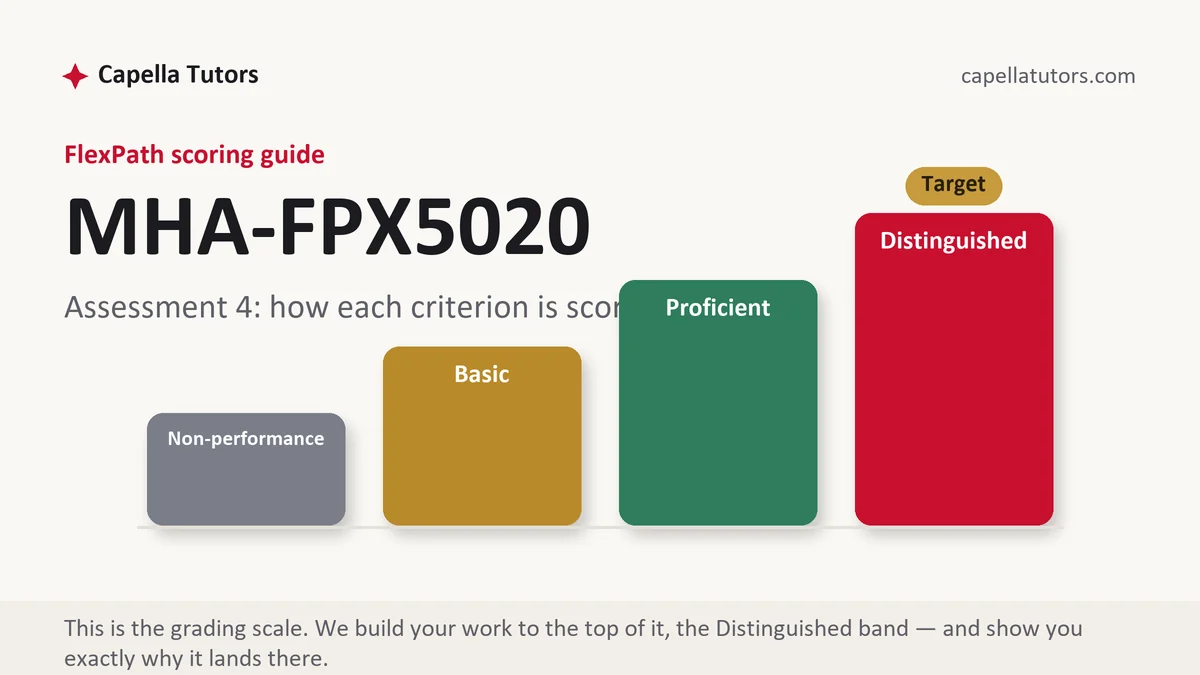
How MHA FPX 5020 Assessment 4 is scored
FlexPath does not use letter grades. Each criterion in the scoring guide lands on one of four levels, and the level descriptions are the real writing brief:
| Level | What it means on a data analysis report |
|---|---|
| Distinguished | Factors and units of measurement are defined, literature findings are summarized, graphics are clear and labeled, the analysis explains what the data show and do not show, and recommendations follow from the analysis with evidence. |
| Proficient | The report is complete and accurate, but the analysis restates the graphics and recommendations are general. |
| Basic | Data are presented with little analysis. |
| Non-performance | The graphics, the analysis or the recommendations are missing. |
Keep the capstone problem from your earlier 5020 assessments. This report supplies the evidence your proposal relies on.
The MHA FPX 5020 Assessment 4 method, step by step
-
Write the synopsis
The problem, the setting and why it matters, in a short paragraph.
-
Define factors and units
What you examined, such as infection rates per 1,000 device days, and the source of each.
-
Summarize the literature
Three or four key findings that frame the data.
-
Present the data
Two or more clear graphics with titles, labels and sources.
-
Analyze
Trends, comparisons and drivers, with the limits of the data stated.
-
Recommend
Evidence-based actions that follow from the analysis.
A structure that maps to the criteria
Word counts are planning targets our tutors use, not Capella rules; follow the length and format your scoring guide states.
| Section | What it must do | Guide |
|---|---|---|
| Overview synopsis | Problem and setting. | ~100 words |
| Factors and units of measurement | What was measured and how. | ~125 words |
| Literature findings | Key findings that frame the data. | ~150 words |
| Presentation of data | Labeled graphics with sources. | 2 or more graphics |
| Analysis | What the data show and their limits. | ~200 words |
| Recommendations and references | Evidence-based actions, then current APA. | ~150 words |
Annotated sample excerpt
An original model excerpt from our team, written to show the register that reaches the top of the guide. Learn the moves, then write your own version.
The first graphic shows central line infections falling from 2.1 to 1.4 per 1,000 line days over two years, but the decline stops after the second quarter of last year, when the hospital's use of central lines rose by 18 percent.1 That pattern suggests the bundle is working at the bedside while exposure is growing, so the rate alone understates the opportunity: fewer unnecessary lines would reduce infections even if the per-day rate stays flat.2 The data come from the hospital's own surveillance reports and cover only two years, so the recommendation pairs a line-necessity review with continued monitoring rather than claiming a fixed reduction.3
- 1Reads the graphic with specific figures and a trend.
- 2Interprets the pattern and identifies a driver.
- 3States the data's limit and scales the recommendation.
The full premium sample for your exact assessment, written fresh to your scoring guide and topic, is free to request. Study it, revise it into your own voice, and submit work you understand.
The five mistakes that cost Distinguished
- Restating the problem. Let the data show its size and drivers.
- Unlabeled graphics. Title, label and source every chart.
- Analysis that repeats the charts. Explain what the patterns mean.
- Recommendations without evidence. Tie each to the analysis and the literature.
- A new topic. Stay with your capstone problem.
Pre-submission checklist
- Synopsis of the capstone problem
- Factors and units of measurement defined
- Literature findings summarized
- Clear, labeled graphics
- Analysis with limits
- Evidence-based recommendations and current APA references
Want the data report built?
Send the scoring guide and your capstone data. Our team returns a premium original report in 24 to 48 hours, revised free until it meets the guide.