This manual is for MHA FPX 5001 Assessment 3, start to submission. The Diversity Project Kickoff Presentation launches the initiative from Assessment 2 in front of the people who will run it: why the organization needs the project, its objectives, the makeup and roles of the committee that will lead it, how interprofessional collaboration will work, and what a diverse and inclusive workplace looks like and delivers. It is a presentation, usually slides with speaker notes or a recorded talk; check your courseroom. The grade turns on a kickoff that a team could act on the next morning. Below is the method our tutors use, a structure that maps to the criteria, and an annotated sample excerpt. Prefer to hand it off? A premium original sample for this exact assessment comes back in 24 to 48 hours, revised free until it meets the guide. Capella's catalog lists the course as MHA-FPX5001, and some courserooms print MHA5001; both point to this same Assessment 3. In current courserooms this assessment typically appears as "Diversity Project Kickoff Presentation".
One honesty note before the manual: Capella revises courses and scoring guides over time, so always write to the exact scoring guide attached to your assessment in the courseroom. The course identity above is verified on capella.edu; the method and structure below are our tutors' approach to it, not Capella's official rubric text.
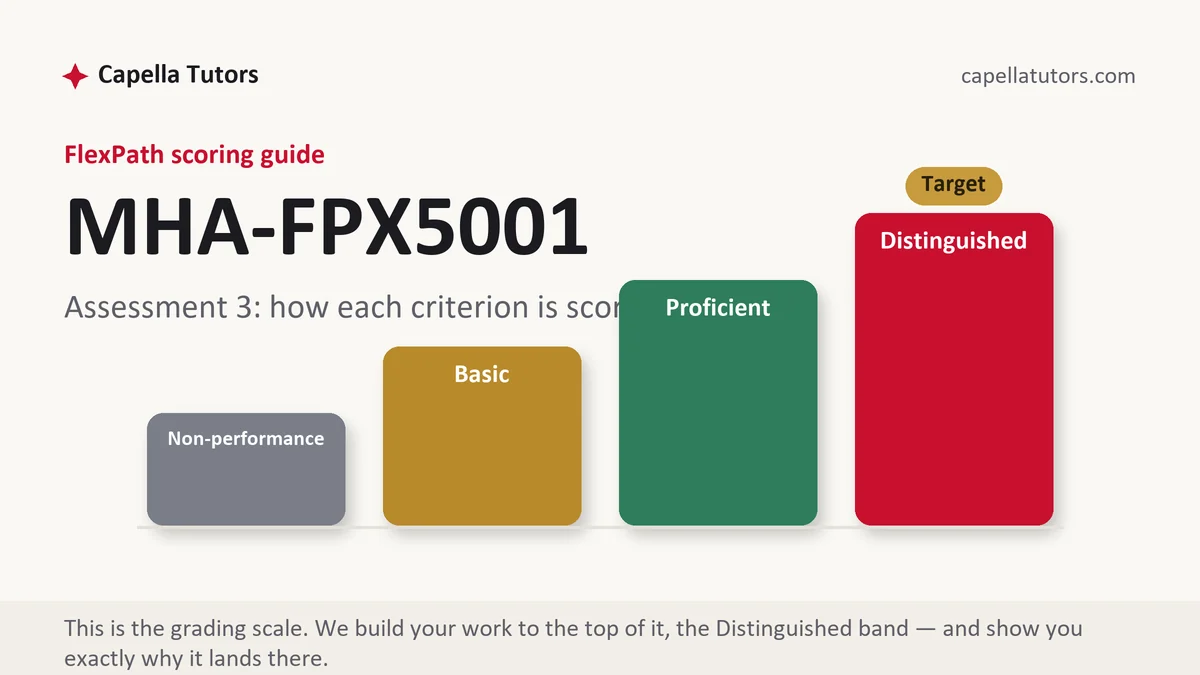
How MHA FPX 5001 Assessment 3 is scored
FlexPath does not use letter grades. Each criterion in the scoring guide lands on one of four levels, and the level descriptions are the real writing brief:
| Level | What it means on a kickoff presentation |
|---|---|
| Distinguished | The need is shown with organizational and published evidence, objectives are measurable, committee roles are specific, collaboration practices are concrete, benefits are supported, and the notes carry the evidence. |
| Proficient | All parts are present and accurate, but objectives and roles are general. |
| Basic | The slides argue for diversity in general with little about this project. |
| Non-performance | The objectives, the committee roles or the speaker notes are missing. |
Keep the initiative and the leader from Assessment 2. The kickoff turns that recommendation into a working team.
The MHA FPX 5001 Assessment 3 method, step by step
-
Open with the need
One or two facts about the organization's workforce or patients that make the project necessary.
-
Set measurable objectives
For example representation targets, training completion, or engagement survey scores, each with a date.
-
Introduce the committee
Who sits on it, how decisions are made, and what each role is responsible for.
-
Plan interprofessional collaboration
Meeting rhythm, communication channels and how departments contribute.
-
Describe the inclusive workplace
Characteristics the project aims for and the benefits the evidence links to them.
-
Write teaching notes
Speaker notes on every slide with citations.
A structure that maps to the criteria
Slide counts and timing vary by version; follow your scoring guide. The note lengths are planning targets our tutors use.
| Section | What the slide and notes must do | Guide |
|---|---|---|
| Title and outline | Purpose and agenda. | 1 to 2 slides |
| Need for the project | Evidence from the organization and literature. | 1 to 2 slides, ~150 words of notes |
| Objectives | Measurable goals with dates. | 1 slide, ~125 words |
| Committee and roles | Membership, decision-making and duties. | 2 slides, ~200 words |
| Interprofessional collaboration | How the team will work across departments. | 1 slide, ~150 words |
| Inclusive workplace and benefits | Characteristics, benefits, references. | 2 to 3 slides, ~200 words |
Annotated sample excerpt
An original model excerpt from our team, written to show the register that reaches the top of the guide. Learn the moves, then write your own version.
Our first objective is simple enough to check at every meeting: by the end of next year, the share of nurse managers from groups underrepresented in our leadership will rise from 9 to 15 percent, in line with the communities we serve.1 The second is that every manager completes the inclusive hiring workshop by June, because interview practice is where bias enters most quietly.2 We will report both numbers at each monthly committee meeting, so the project is judged by results rather than by how many events we hold.3
- 1States an objective with a baseline, target and date.
- 2Links the second objective to where the problem arises.
- 3Sets a reporting rhythm that makes the objectives accountable.
The full premium sample for your exact assessment, written fresh to your scoring guide and topic, is free to request. Study it, revise it into your own voice, and submit work you understand.
The five mistakes that cost Distinguished
- A general case for diversity. Show why this organization needs this project.
- Objectives without numbers. Make each objective measurable.
- A committee with no roles. Say who decides what.
- Slides without notes. The notes carry the evidence.
- A new initiative. Build on Assessment 2.
Pre-submission checklist
- Need shown with evidence
- Measurable objectives with dates
- Committee membership and roles
- Collaboration plan
- Benefits supported by evidence
- Speaker notes with current APA
Want the kickoff deck built?
Send the scoring guide and your Assessment 2 response. Our team returns a premium original deck with speaker notes in 24 to 48 hours, revised free until it meets the guide.